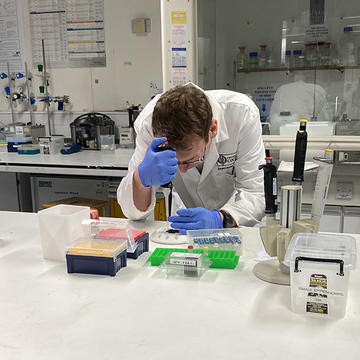
Researchers at the University of Oxford have been awarded £3.7 million to evaluate devices designed to detect substandard and falsified vaccines in supply chains.
The three-year programme will independently assess the performance of a range of technologies that could enable medicines regulators, manufacturers and distributors to rapidly screen vaccines and identify products that require further laboratory testing. The work supports the World Health Organization's strategy to prevent, detect and respond to substandard and falsified medical products.
The Department of Chemistry is a key partner in the project through Professor James McCullagh and the Mass Spectrometry Research Facility, building on the department's work developing analytical methods for vaccine authenticity screening. Recent research from the Vaccine Identity Evaluation (VIE) collaboration has shown the potential of mass spectrometry, laser spectroscopy and repurposed rapid diagnostic tests to distinguish genuine vaccines from falsified products.
The award brings together researchers from the Department of Chemistry, the Centre for Tropical Medicine and Global Health, the Department of Biochemistry and the Kavli Institute for Nanoscience Discovery, alongside UK and international partners. The programme aims to provide the evidence needed for effective, practical technologies to be deployed in vaccine supply chains worldwide.